


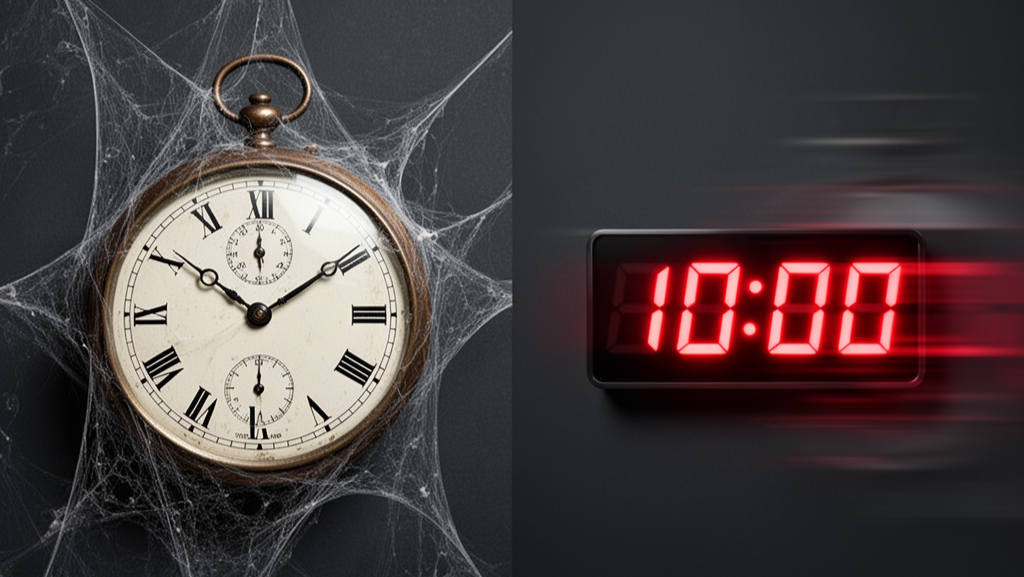
The Death of the "Golden Hour"
The comfortable “Golden Hour” of crisis response has expired.
Leaders now face the unforgiving reality of the two-hour digital day.
In this accelerated window, a single misstep matures into a dominant narrative before the communications team can even open a laptop.
Legacy playbooks fail here because they prioritize verification over velocity. While executives debate the legal nuance of a statement, the audience has already reached a verdict. The silence of those first few hours creates a vacuum that speculation fills immediately.
By the time the official press release clears the chain of command, the reputational damage is often permanent. We are playing a 20th-century game in a 21st-century timeline.
The Structural Deficit
The breakdown in leadership credibility represents a quantifiable structural failure. The data confirms that traditional command-and-control infrastructure is buckling under the pressure of modern velocity.
Recent analysis reveals that a mere 48% of employees currently trust their senior leaders to navigate uncertainty. This skepticism creates massive internal friction exactly when an organization needs speed and alignment the most.
The pressure to maintain a facade of control is also breaking the leaders themselves. Gartner reports that 75% of managers now feel overwhelmed by their expanding responsibilities.
Consequently, we are seeing a sharp rise in executive burnout and mental health strain. We are effectively placing outdated 20th-century demands on a leadership class that is running on empty.
The "Weak Signal" Gap
Recruiters continue to prioritize operational excellence in their candidate profiles. They typically search for leaders with a proven track record of extinguishing fires.
However, the true scarcity in the talent market has shifted. Organizations now require leaders who possess “weak signal detection” rather than just reactive capabilities. This is the ability to sense a subtle temperature change in stakeholder sentiment before it solidifies into a metric.
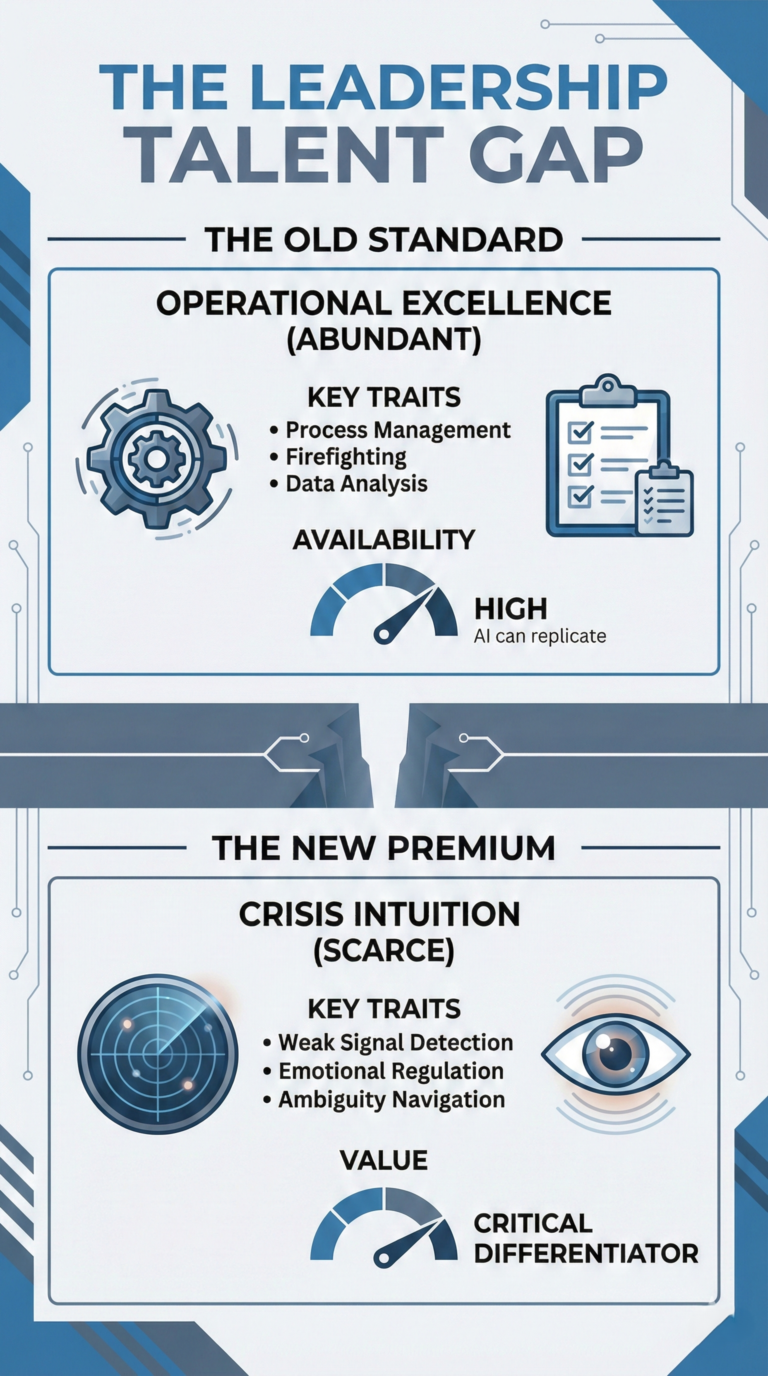
We are currently hiring for the wrong competencies. Algorithms can process historical data with perfect accuracy. They cannot, however, read the room or anticipate an emotional shift. That intuitive judgment is the new premium asset in leadership.
From Communication to Resilience
Addressing this gap requires us to dismantle the current approach to executive development.
Most organizations still pour resources into standard “crisis communication” training. They teach leaders how to stay on message or deflect hostile questions. However, this approach focuses entirely on the output—the words spoken after the fact.
The real competitive advantage lies in the input.
We must shift our focus to Crisis Intuition. This means building the cognitive infrastructure leaders need to process ambiguity without freezing. It requires high-touch simulations and rigorous emotional regulation coaching.
This is the new premium. You cannot acquire this level of resilience from a slide deck or an online module.
The Readiness Audit
The next time you review your organizational risks, look beyond the legal binder. Ask if your leadership team has the “muscle memory” to navigate a high-velocity reputation threat.
If your strategy relies solely on a phone tree and a drafting committee, you remain vulnerable.
Real readiness requires a shift from operational checklists to cognitive preparation.
It is time to audit your crisis intuition before the timer starts.